Boat-Billed Heron
Cochlearius cochlearius
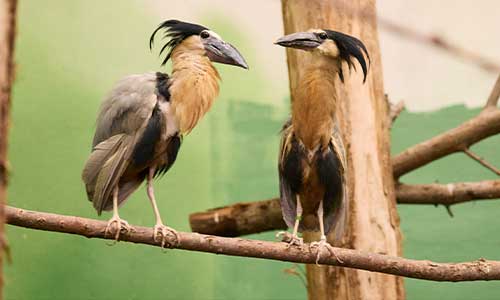
About the Boat-Billed Heron

Geographic Range:

Class: Aves
Order: Ciconiiformes
Family: Ardeidae
Genus: Cochlearius
Species: cochlearius
Native to the mangroves, marshes and tropical forests of Central and South America, the boat-billed heron is a unique nocturnal bird named for its broad, scoop-shaped bill. Its large eyes and sensitive beak help it locate fish, shrimp, insects and other prey in the dark or in murky water. Boat-billed herons spend their days resting and preening, using a special powder produced by continuously growing feathers to help waterproof their plumage. During the breeding season, both parents share the duties of incubating eggs and caring for their young.
Committed to Conservation
Zoo New England participates in the boat-billed heron Species Survival Plan. By sharing research and knowledge, participating institutions work together to establish guidelines that best ensure the health of captive populations, and with success, the survival endangered species.
Boat-Billed Heron Facts
Appearance:
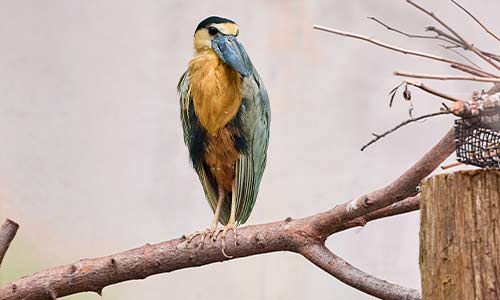
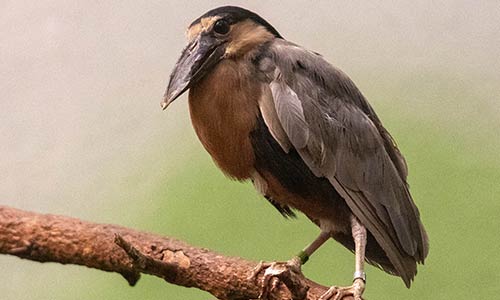
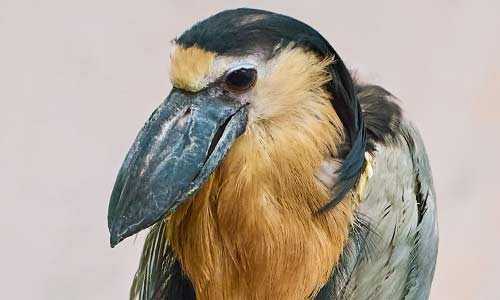
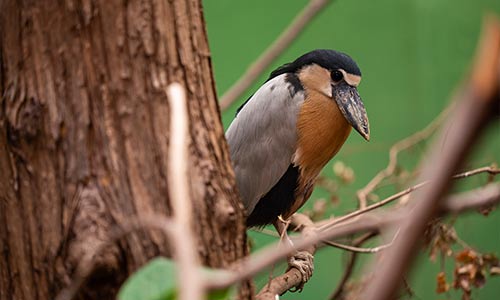
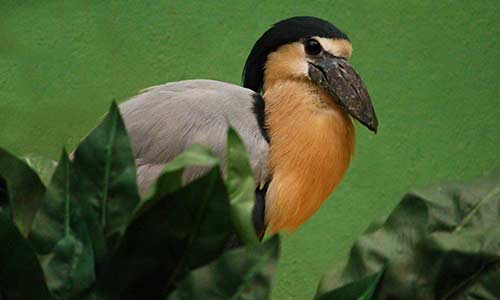
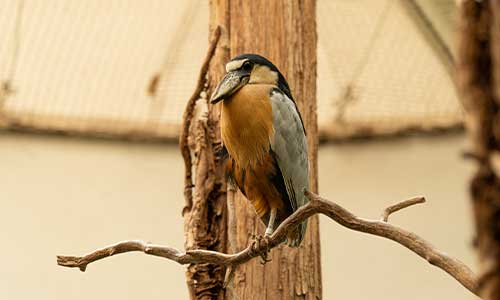
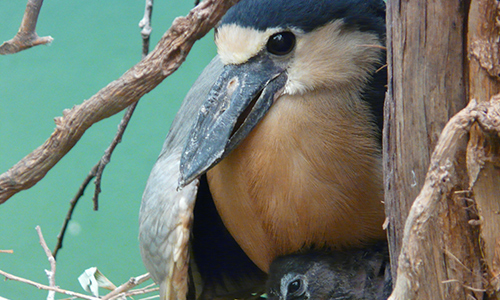
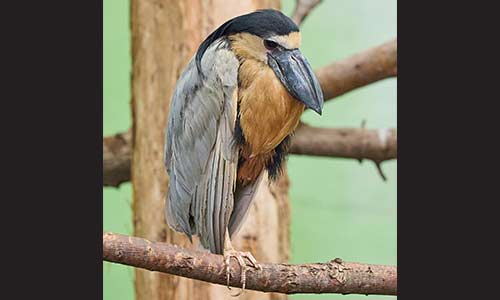
Herons are a stocky medium-sized bird. Their bills are as wide as their heads, and they have large eyes that aid in night-hunting. Their beak is very sensitive, allowing them to feel out prey in murky water. They have a dark crown and flight feathers and a light underbelly and face.
Herons have a specialized downy feather that doesn't molt and grows continuously throughout the bird’s life. The ends break off as a powder that the heron then uses while preening to waterproof its other feathers.
Size:
Weight: 1 pound
Length: 20 inches long; wingspan of 30 inches
Diet:
Fish, shrimp and insects. They can also feed on small mammals and amphibians.
Reproduction:
The heron's breeding season is during the local wet season which varies across their range. The female lays two to four eggs and both parents incubate them for 21 to 26 days. Chicks are born altricial (blind) and are fed by both parents over the course of six to eight weeks, after which they fly away.
Behavior:
Boat-billed herons are nocturnal. They hunt at night and rest/preen during the day. However, during the breeding season, they've been known to hunt during the day as well, in order to feed their young.
These birds are normally solitary, only gathering to mate. They're monogamous during the breeding season and possibly beyond. Data is insufficient to support lifetime monogamy to a single partner. Both parents take care of the young and defend the nest.
Habitat/Range:
Boat-billed herons live in a wide range of mangroves, marshes and tropical rainforests throughout Central and South America.
Median Life Expectancy:
8.8 years
Role in their Habitat:
Boat-billed herons are predators for fish, shrimp and small mammals and amphibians. They're preyed upon by snakes, foxes and raptors.
You Can Find This Animal in the Bird's World
It Fits the Bill!
This heron's wide beak isn't just for looks—it helps the bird detect and catch prey in murky water.

You might also like
At Franklin Park Zoo:
At Stone Zoo: